
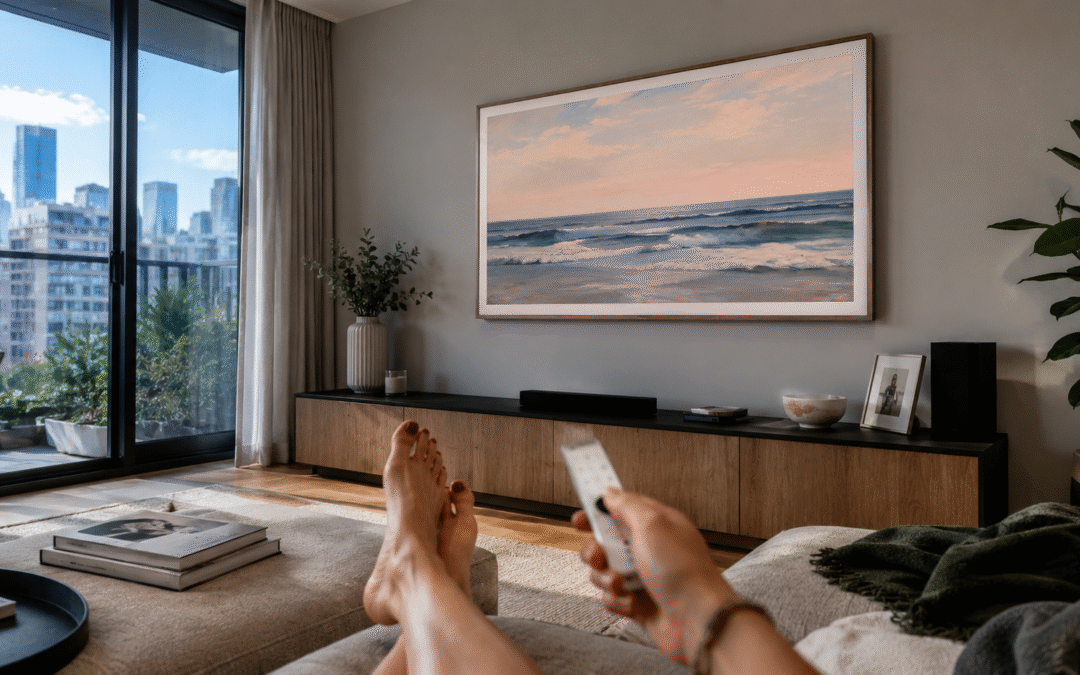
A Samsung Frame TV installation in Sydney can look excellent when it is planned properly. The clean “picture frame” style is the main reason people choose them, especially in apartments and modern homes where the TV is meant to blend into the room rather than dominate it.
But a Frame TV installation is not the same as mounting a standard flat-screen TV. The final result depends on the wall structure, the bracket position, the One Connect Box location, the cable route and whether power has been planned in the right place. This is especially important in Sydney apartments, where metal studs, shared walls, limited wall cavities and pre-installed power points can all affect the finished result.
Before booking a Samsung Frame TV installation, it is worth understanding what the TV can do — and what needs to be checked before drilling into the wall.
Why The Frame TV is different from a normal TV
Samsung’s The Frame TV is designed to sit close to the wall and look more like framed artwork than a standard television. Current Frame models are commonly promoted around features such as Art Mode, slim wall mounting, customizable bezels and a cleaner cable setup using Samsung’s One Connect system.
The installation difference is the important part. With many normal TVs, the power cable and HDMI cables plug directly into the rear of the panel. With The Frame, the screen connects to a separate One Connect Box, which handles the main connections. This can create a cleaner look, but it also means the One Connect Box needs somewhere practical to go.
That is where many installation problems start. Customers often buy The Frame expecting the TV to sit perfectly flat on the wall with no visible cables. That can be achieved in some homes, but not in every case. The wall, the bracket, the cable path and the box location all need to work together.
The Slim Fit Wall Mount does not mean unlimited positioning
The Samsung Slim Fit / no-gap style wall mount is designed to help the TV sit very close to the wall. Samsung describes this type of mount as creating a sleek, flush-to-wall result, although the final gap can vary depending on the TV model, installation and wall type.
The practical issue is that the bracket still needs safe fixing points. On many Frame TV installations, the wall mount uses separate fixing points across the wall rather than one large universal plate that can be shifted freely. This means the final horizontal position of the TV may be affected by where the studs or beams are located behind the plasterboard.
In a typical Sydney apartment, this matters. If the bracket points do not line up with suitable timber or metal framing, the TV may not be able to sit in the exact position the customer had in mind. Moving the TV slightly left or right may be safer than forcing the bracket into a weak fixing point.
This is especially important with larger Frame TVs. A 65-inch, 75-inch or larger screen puts more load on the wall and bracket. The installation needs to be based on the wall structure, not just the centre point marked on the wall.
The One Connect Box issue most buyers do not expect
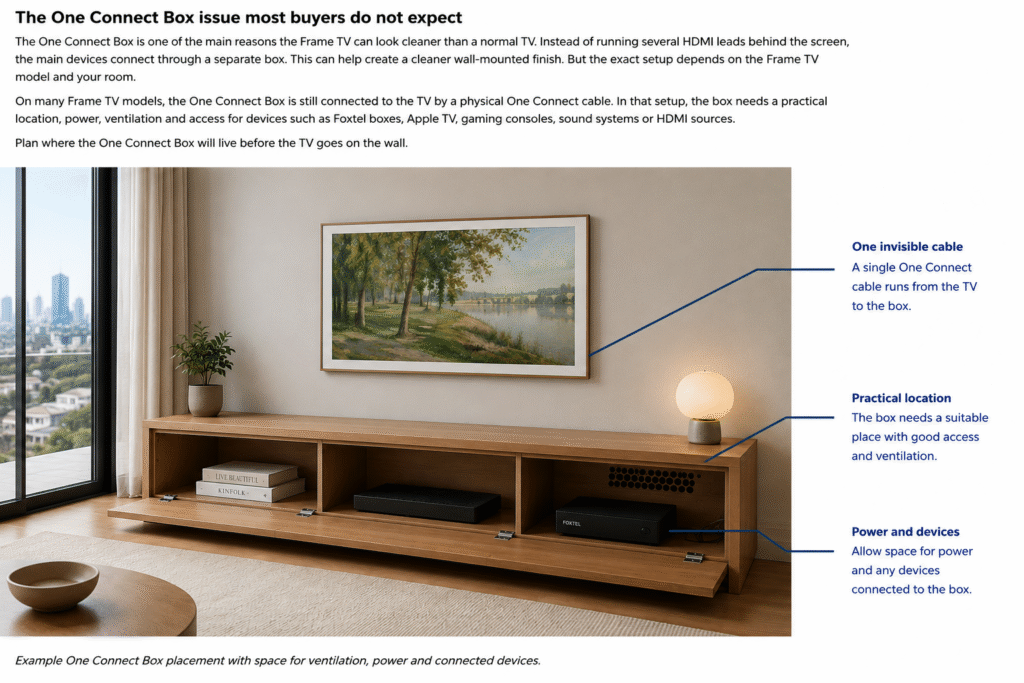
The One Connect Box is one of the main reasons The Frame TV can look cleaner than a normal TV. Instead of running several HDMI leads behind the screen, the main devices connect through a separate box. This can help create a cleaner wall-mounted finish, but the exact setup depends on the Frame TV model and year.
On many Frame TV models, the One Connect Box is still connected to the TV by a physical One Connect cable. In that setup, the box needs a practical location, power, ventilation and access for devices such as Foxtel boxes, Apple TV, gaming consoles, sound systems or HDMI sources. If there is a cabinet below the TV, this is usually straightforward. If there is no cabinet, shelf, joinery or planned wall cavity, the installation becomes more complicated.
Newer Frame Pro models change this by using Samsung’s Wireless One Connect system. This means the video and audio signal can be sent wirelessly from the box to the TV, so the box has more flexibility in where it can be placed within the room. But it does not remove power planning. The TV panel still needs its own power, and the Wireless One Connect Box also needs its own power. In other words, wireless signal does not mean a completely cable-free installation.
This is where many customers get caught out. They purchase The Frame expecting a perfectly flush TV with no visible cables, then realise the final result depends on the exact model, the power position, the box location, the wall type and whether the cable route has been planned properly. The Frame TV can still look very clean, but it needs to be planned before installation, especially in apartments or rooms without a cabinet below the TV.
Why a power point behind the TV may not solve the problem
A common mistake is installing a power point high on the wall behind where the TV will go, assuming this will make the Frame TV installation simple. With a standard TV, that can often work because the power cable plugs directly into the rear of the panel.
With The Frame, it depends on the model. On wired One Connect versions, the screen connects to the One Connect Box, and the box needs power. A power point behind the TV may not help if the box is sitting in a cabinet below, beside the fireplace, inside joinery or in another planned location. On newer Wireless One Connect versions, the TV panel itself still needs power, so a rear power point may be useful — but it still needs to be recessed or placed carefully so it does not interfere with the flush wall mount.
There is another issue as well. A power point, wall plate or bulky outlet behind the TV restricts how flush the wall-mount can be. The whole reason people choose The Frame is usually to get a clean, close-to-wall finish. If the wall already has a power point in the wrong place, the TV may sit out from the wall more than expected.
The better approach is to plan the Frame TV installation before adding power points or wall plates. The installer needs to know where the TV will sit, where the bracket can safely fix, where the One Connect Box will go and how the cable will travel between them.
Sydney apartment walls and metal studs
Sydney apartments can create extra installation issues because the wall is not always built like a standard timber-framed house wall. Many newer apartments use metal studs or different internal wall systems, and some walls have limited cavity space, services running behind them, or restrictions because they are shared walls.
This matters because The Frame TV bracket still needs safe fixing points. With larger screens, especially 75-inch and above, the weight and leverage on the wall increase. A fixing method that may be acceptable for a smaller TV is not automatically suitable for a large Frame TV, particularly if the wall has metal framing or limited structural support.
Metal studs need careful assessment. The issue is not just whether screws can go into the wall. The installer needs to consider the TV size, bracket type, wall construction, fixing method and how the load will behave once the TV is mounted. Large TVs can place extra stress on the wall when handled, adjusted or tilted during installation.
For apartment installations, the safest approach is to check the wall before assuming the TV can go exactly where planned. Sometimes the final position, fixing method or cable route needs to be adjusted to suit the structure behind the plasterboard.
Best installation options for a clean Frame TV finish
The best Samsung Frame TV installations are usually planned around the room before the bracket goes on the wall. The aim is not just to hang the TV. The aim is to make the TV look intentional, safe and clean once everything is connected.
A cabinet below the TV is often the simplest option because it gives the One Connect Box, streaming devices, gaming consoles and sound equipment somewhere practical to sit. This can still look neat if the cable path is planned properly.
For customers who want a more hidden result, a recessed wall cavity, joinery space or planned cable route may be possible, depending on the wall and room layout. This needs to be checked first because not every apartment wall has suitable space inside it.
Cable concealment should also be planned before installation. With wired One Connect models, the cable path between the panel and the box is central to the finished look. With Wireless One Connect models, the cable issue changes, but power still needs planning at both the TV and box locations.
The cleanest result usually comes from deciding three things before installation: where the TV will sit, where the box and devices will go, and how power and cables will be handled.
When to book professional Frame TV installation
Professional installation is especially worth considering when the Frame TV is large, the wall has metal frames behind plasterboard, or the customer wants a clean finish without visible cables. These are the types of jobs where experienced planning matters most.
A professional installer should check the wall type, bracket position in relation to the studs, screen size, power location, cable route and One Connect Box placement before mounting the TV. This is particularly important in apartments, newer builds, rooms without a cabinet below the TV, and installations involving 65-inch, 75-inch or larger Frame TVs.
It is also worth getting advice before adding power points or wall plates. A non-recessed power point in the wrong place can interfere with the flush wall-mount finish, and a cable route that looks simple on paper may not suit the wall once all of these factors are taken into consideration.
Samsung Frame TV installation across Sydney
Easy TV installs Samsung Frame TVs across Sydney homes, apartments and commercial spaces. We can help with wall mounting, bracket positioning, cable concealment, One Connect Box placement, soundbar setup and practical advice before installation begins.
If you are planning a Frame TV installation, the best time to ask for advice is before drilling, before adding power points and before assuming the TV can sit in one exact position. A short check at the start can avoid a poor finish later.
For related services, see our TV installation page, Samsung One Connect cable concealment examples, and soundbar wall mounting services.